Episode Transcript
[00:00:00] Speaker A: Good morning everybody.
The room is well filled, but seems to be a little quieted down. So I'm guessing you all have noticed it is 9:30 and time to begin. I am Kathy Sackenfeld, a member of the Adult Education Committee. And it's my joy today to introduce Heath Carter. And I don't need to tell you too much about him because it's all up there on the board. He is an associate professor of American Christianity at Princeton Seminary and a good friend and neighbor. And we're so happy that he and all of his family participate in the life of Nassau Church. And today we're up for the second of the talks for our LinkedIn series. And again, the title is on the screen, Social Gospels and Smaller.
The Rise and fall of Evangelical 2.0.
And before Heath comes up, I'd like to share with you a prayer that was written by a Catholic priest in Belgium.
He lived from 1904 to 1996.
And I thought of this prayer because we also have Romans 12 and we have All Saints Day.
So there's a lot to think about in terms of the varieties of, of Christianity and approaches to faith. So please join me in prayer.
Come, Holy Spirit.
We do not ask of you any special gift for ourselves, but neither do we refuse any gift either because we receive those manifestations not for ourselves, but for the kingdom of God and for the building up of your church.
One person will receive a certain manifestation of the Spirit, another, a different one.
But all may use their particular gifts in the upbuilding of the church.
And we pray that you will guide us and help us through what Heath has to say today to know how to use our gifts.
We pray in Christ's name. Amen.
[00:02:16] Speaker B: Amen.
Good morning everyone.
Great to be back with you.
We are going to cover a good amount of terrain today as well, not quite as much as last week.
We're hurtling toward the the present where certainly a lot of the interest in this topic comes out of what's happening right now. And so we will, in the last two weeks that I'm with you all, really spend a lot of time thinking about how we get to this particular moment. But I want to spend another week back a little further in the past looking at another moment in what we've called Evangelical Protestant faith.
Last week, just for those who weren't here, we, we flew through 150 years, looked at the rise of a religion of the heart out of the Reformation, the ways that, that God, speaking directly to individuals upended or had the possibilities of upending Traditional hierarchies.
We talked about briefly the fusion of a kind of evangelical Protestant faith with US Nationalism in the early years of the Republic. The, the rise of what I called Evangelical 1.0, this benevolent empire marked by voluntary societies championing all kinds of reform project.
The ways that that project became in the antebellum United States deeply interwoven with white supremacy, and the ways that it came apart in the era surrounding the Civil War. So that was all last week.
Today.
Yeah, I know I want to pick up after the Civil War. And in a moment I've mentioned this in this room with y'.
So it's interesting to think about how to characterize the moment we find ourselves in. The word unprecedented has often been used.
There are certainly many distinctive elements to what we face today.
But the crises of our time are not, I don't think, entirely unprecedented in their scope. So if we pick up in the wake of the Civil War, Reconstruction, 10 or 12 years after the Civil War is this remarkable moment where a kind of radical experiment in multicultural, multiracial democracy starts to take root in the US south, but is undone. 1877, I've said in here before, was a very bad year in US History. It was a moment when after a contested election in 1876, Rutherford B. Hayes was put into the White House a Republican, in return for the withdrawal of federal troops from the United States South. That corrupt bargain, as it was called, gave way to a several decade long period. It didn't happen right away, it took decades, but a several decade long period in which white paramilitary violence across the south undid a new thing that was being born there. Truly, there was a radical thing happening in the south in the immediate wake of the Civil War that had to be killed, and it was killed in the wake of the withdrawal of federal troops from the United States south starting in 1877. It wasn't killed immediately, it took decades. But that same year in 1877 that US troops would draw from the south, across the country, there's major walkouts of railroad workers because railroad operators were colluding to suppress wages.
So across the country, starting in the east, moving to the west, railroad workers go out on strike, they take to the rail yards, they burn train cars, they overturn train cars.
And everywhere, their assaults on property were met with assaults on life. So part of what happened in 1877 is the newspapers are running images. This is from Harper's Weekly from Chicago. Images of sometimes private, sometimes public militias and law enforcement just shooting into crowds of often unarmed workers. This is 1877, United States of America. This is a very dangerous time in our nation's past. It was a time when hopes of a more equal nation in the wake of the Civil War were giving way to new depths of profound structural inequality.
Part of what was happening, and it bears noting, is that those forms of structural inequality often had the tacit support, if not the explicit support, of churches, both in the south and in the North. This moment in Chicago, folks got up in the pulpit that Sunday because a lot of these folks who were mowed down the streets were immigrants and white Protestant pastors got up in the pulpit two days later and said, the worst thing about this riot is that more were not killed, because it would, you know. And yeah, so this was a very common point of view that the churches were offering, you know, at least tacit, often support to the kinds of injustice that were emerging in the late 19th century in that very same moment. And here's where we're going to fly.
Ordinary folks, often motivated by their faith, built movements for a better church and a better world. They built a labor movement that over the course of time would gain momentum and get the attention of leaders of church and state alike.
They built movements for civil rights already, starting in the immediate wake of Reconstruction's demise. Ida B. Wells was campaigning against lynching on all sides of the Atlantic, all over, often again, motivated by her faith. William Jennings Bryan, who I'm going to come back to in a little bit, became a kind of, you know, he stood in for the common person for a lot of folks. He helped to build an electrifying populist movement that stood against Wall street and demanded that everyday people not be oppressed by the banks.
Middle class women like Mary McDowell and Jane Addams, they founded settlement houses in cities where they practiced grassroots democracy and tried to help folks get organized in neighborhoods for racial and economic justice. These are all examples of ordinary people, social gospels, emerging from the bottom up. And I think the short version of the story that I want to tell today is that their witness, really the needle.
So in a really dangerous time, I've said this in here before, it was ordinary people doing small, faithful things in front of them, building movements for social change that didn't begin at the top, but that really began at the grassroots that moved the needle. Lots of different responses to these movements, and part of what I want to think about with you today are the kinds of responses that we can see.
Partly, these grassroots movements help to generate a sense of crisis across American society. There was so often battles in the Streets, conflict in the streets, that a lot of middle class people are really worried. Is our society going off the rails? Is democracy going to survive?
For a certain kind of minister who was sympathetic to the movements, there was an opening.
Walter Rauschenbusch was a pastor in Hell's Kitchen in New York City, immigrant neighborhood, where he was changed in his own heart. His own heart, I think, was opened up in a new way to the struggles of the poor and immigrants.
He talks later in his life about the impact that burying babies in this church had on him, getting to know the struggles of the poor firsthand. He went on to become a professor at Rochester Theological Seminary, where he became kind of one of the more noted Christian socialists in the early 20th century United States. A voice for economic democracy. He published a sensational 1907 book, Christianity and the Social Crisis, in which he argued that Jesus was a social radical whose radicalism had been toned down through the centuries by the Church. He had some anti Catholic kind of tendencies and was especially convinced that the Catholic Church was partly to blame for Jesus radicalism being muted.
For Rauschenbusch, equality was the only real basis for democracy, and it was the only true basis for Christian morality.
Christ was, in his view, in this moment, as he's thinking about how to respond to the crises, to these grassroots movements, Christ, in his view, was calling forth what he thought of as a new apostolate to reinvigorate the mission of Christ's church.
A few years later, Rauschenbusch published another book called Christianizing the Social Order.
Some of you have read some of this if you're in the small groups. He marveled in that foreword at how quickly things were changing in his time. He said that within a few months of publishing Christianity the Social Crisis, the social awakening of our nation, had set in like an equinoctial gale. In March, it won popular approval. His social gospel. Far beyond my boldest hopes, he said, I had urged a moral reorganization of social institutions, a Christianizing of public morality. And in this new book, Christianizing the Social Order, he elaborated the case, declaring the problem of Christianizing the social order welds all the tasks of practical Christianity with the highest objects of statesmanship. That the actual results of our present social order are in acute contradiction to the Christian conceptions of justice and brotherhood is realized by every man who thinks at all.
For RAUSCHENBUSCH in the first second of the 20th century, it seemed like these social movements that had been born out of great danger were bringing the kingdom of God closer to where you could almost touch it. Part of his aim was, as he was very forthright about, and we're talking partly in this series about Christian nationalism, which I think is a tricky category.
Part of what Rauschenbusch wanted to do was to Christianize the social order.
So for him, what did that mean? It meant partly he wanted there to be greater equality, especially economic inequality. He was very disturbed about economic inequality. He didn't comment as much as he should have. He actually says this himself late in his life about racial inequality.
So, you know, again, I think we can think about different projects that have called themselves evangelical and different ways in which people have pursued something you could kind of call Christian nationalism. Rauschenbusch, in my view, is doing something along those lines, though it's a very different kind of project than the one we see maybe on the move today.
Rauschenbusch saw an opening in this moment, but he also was worried about the backlash. So part of the story of this period, part of the story, what's happening in the midst of all these grassroots social movements is a conservative backlash against changes in church and society. Goes all the way back to the 1870s, the very same period of Reconstruction.
You may know, you may have heard one of the most famous heresy trials of that period pitted David Swing, who was the pastor of Chicago's Fourth Presbyterian Church, against Francis Patton, who was a graduate of Princeton Seminary who went to become PTS's first president.
Swing was insufficiently orthodox in his beliefs. He was not a social gospel, or he was really anti labor. But Patton wasn't convinced that he was holding the line on inspiration of Scripture, doctrine of the Trinity, justification by faith, the five points of Calvinism, and more.
Swing was vindicated at the trial, but left the Presbyterian Church before the inevitable appeals could ensue. If there was a conservative backlash against some ministers in the denominations, it was also happening within the seminaries. Charles Briggs, a liberal Presbyterian at Union Theological Seminary, was also put on trial, Brought many of my predecessors on the PTS faculty running back into the fray, and resulted in not only Briggs ouster, but also Union leaving the Presbyterian Church in a very different geographical, theological context.
Last week, we talked about the plain readings of scripture that could sometimes mobilize egalitarian movements for change.
DL Moody always preached a very kind of common sense, plain reading of Scripture.
He himself wasn't a champion of the labor movement, but he was interested in connecting with working people. He was worried about working people's disaffection from the churches.
Some working people saw Moody as Their friend. It's very complicated. We could talk more about that if you want.
But the reality is that that same plain reading of Scripture that Moody prized was in fact helping to motivate those grassroots movements that I talked about, the labor movement, these civil rights movements. Folks are pointing to the Bible and saying, hey, this is where my faith takes me. This is where it leads me. And so at Moody Bible Institute, within a few years of Moody's death, the board says, we got to get a handle on this.
It's at that moment that you see the introduction of dispensationalism at Moody Bible Institute as a core doctrine. We talked last week about how a lot of the evangelical movements of the earlier 19th century were very post millennial. They believed a kind of optimism, the possibilities of changing the world.
Dispensationalism is this kind of rapture. The rapture is the most familiar culturally, I think today, part of dispensationalism. But there's a whole deeper theory of epic epochs of time and the way that history is unfolding that's connected to very arcane readings of the Bible.
Particular passages in Daniel and Revelation don't actually mean what the plain reading would seem to be. They mean something very different.
So for folks at Moody Bible Institute who are responding in their own way to the grassroots egalitarian movements of their time, they say dispensationalism offers some greater measure of control over where the Bible can take us.
If people are picking up the Bible and saying, hey, Jesus says the laborer is worthy of his hire. But in fact, to understand that Scripture, you need to connect it to Daniel, to Revelation, to suddenly you're in the weeds, and it doesn't mean exactly what it would seem.
Part of what in my field we've tended to do over the last generation is follow this conservative backlash against these movements.
We've been really interested in it because we've been really interested in explaining the modern religious right and helping to get a kind of usable past that explains our present.
Our stories have often focused on conflict between conservatives and liberals. We have this famous story. Here's William Jennings Bryan again in a very different context now. Not as the populous barn burner for president, but as the defender of anti evolution teaching in Dayton, Tennessee, in the famous Scopes monkey trial, which is often stood in as this kind of moment that captures the spirit of the age. According to this story, the spirit of the age is one of conflict between liberals and conservatives. The film Inherit the Wind, of course, depicts this trial. This epic conflict Between Brian, who in this story stands in for kind of the old time religion defending against the teaching of evolution in schools, and Clarence Darrow, the nation's great free thinking attorney who loses the trial but wins the cultural war. According to this version of the story, the conservatives go fleeing, though we know that here in Princeton. I have to talk about this. Here in Princeton, the conservatives were still fighting at the end of the Scopes Monkey trial. I don't know if you know this story. It's a juicy one. Give me just a second.
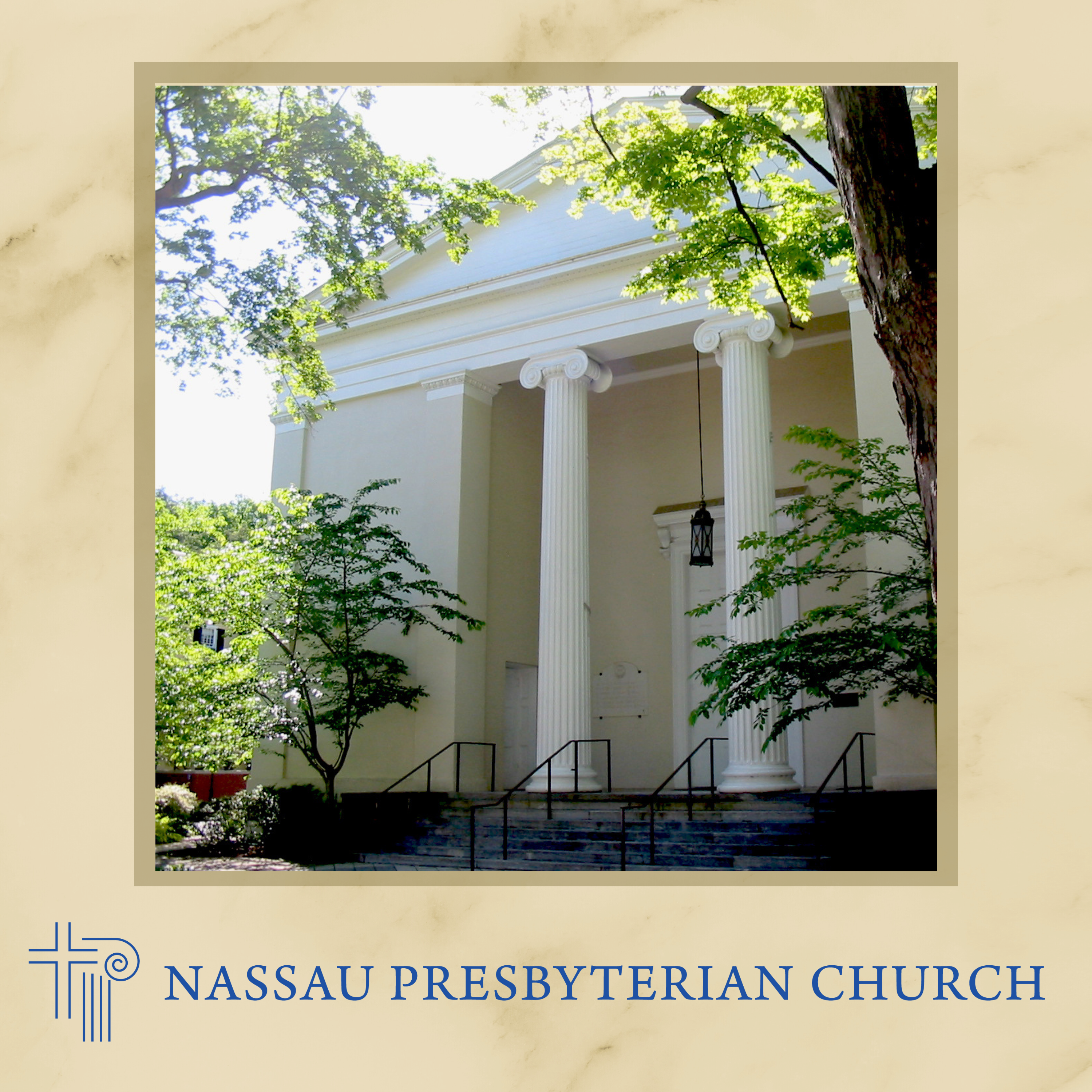
In 1923, the First Presbyterian Church here in Princeton, New Jersey, Nassau as we now call it pulpit, opened up and J. Gresham Machen served as the supply preacher, the interim.
He took the chance to preach. Some of you have read Machen if you're in the small groups. And following along with the readings, he took the chance to preach against modernism and to promote his brand of conservative exclusivism. In his book Christianity and Liberalism, published that same year, Machen argued there could be no compromise between conservatives and liberals because the latter the liberals had invented an entirely different religion, only the more destructive of the Christian faith, he wrote, because it made use of traditional Christian terminology.
As soon as Machen assumed the pulpit, his colleague at pts, Henry Van Dyke, stopped attending the church in Protestant.
He wrote in a letter to the session published in the press that he would no longer bother, quote, listening to such a dismal, bilious travesty of the gospel.
Until Machen is done, count me out and give up my pew in the church.
This is good faculty.
In 1924, another one of their colleagues, Charles Erdman, was called as the pastor of First Church and Van Dyke returned that next year. A conservative Philly based Presbyterian journal wondered aloud what did Van Dyck's return mean about First Church and about pts?
Erdman was really mad about this. He wrote that the differences between colleagues were not theological. Nobody at PTS was a liberal in this moment.
The differences between colleagues were not theological, but rather questions of, quote, spirit, methods or policies.
Urban went on. This division would be of no consequence were it not for the unkindness, suspicion, bitterness and intolerance of those members of the faculty who are also editors of the Presbyterian.
Only J. Gresham Machen could be understood to be implicated by that line. Later that same year, Erdman, Machen's colleague, was running to be the moderator. He was nominated to be the moderator of the Presbyterian General Assembly.
Machen and several other of Erdman's colleagues at PTS published a pamphlet setting forth why he should not be elected moderator in May, right before the assembly meeting. This is like great faculty conflict, epic.
In May, right before the assembly meeting, Machen declared, quote, Dr. Erdman, despite his personal orthodoxy, had the plaudits of the enemies of the gospel.
It was a most revealing statement.
Their differences had nothing to do with doctrine.
They revolved around how big the denominational and institutional tents should be.
And this is Machen.
In 1929, he and a number of his allies left to found Westminster Seminary in Philadelphia. The smaller tent folks lost at pts.
In my view, the kind of story of this sort of conflict, it makes for good storytelling. It functions as a usable past. It can help us to understand today the hyperpolarization of our current moment.
But I think if we are only interested in that which we are interested in, and we'll come back to this moment in the weeks ahead, we can miss something really important that took shape in the 20th century.
That's the bigger story, in my view. The one that could be, should be. Probably the leading headlines in our histories of this period is about the construction of a big tent evangelical Protestant coalition that at a moment when some people are running with social gospels in pretty lefty directions, others are backlashing. There was a big group of folks that were trying to hold it all together, and they did for a generation or more, holding together what they considered historic Christian faith on the one hand, and on the other hand, the pursuit of a more just society in the early 20th century. This gets confusing. This is why we're doing this series. The members of this coalition often called themselves evangelical Protestants.
It's confusing because they were different in some ways from the benevolent empire that we talked about last week. And they're even way more different from the folks we're going to talk about next week, the evangelical 3.0 folks. That's the way that we typically use the term these days, is with the 3.0 people who kind of begin to gather around Billy Graham.
By the 1960s, the folks I want to talk about today, the 2.0 people, answered to the word mainline. That's how they've come to understand themselves. But in the earlier 20th century, they called themselves evangelical. They were part of an evangelical turned mainline tradition that was defined in no small part by its commitment to holding together all the disparate sides within American Protestant life.
So what I want to do in the next few minutes is narrated briefly the rise and fall of Evangelical 2.0. This is a project, like I said, that sought to hold together the social gospels that were emerging from the grassroots on the one hand, with older imperatives for evangelism and whatnot. The Federal Council of Churches, in my view, was the most important evangelical organization of the early 20th century. It was founded in 1908 in Philadelphia with two main goals in mind. To testify to the underlying unity of the churches of Christ in the United States, on the one hand, and to bolster Christian efforts to reform U.S. society on the other, holding together traditional historic Christian faith with efforts for reform. It was a huge tent. At its founding, it included 33 denominations. By design, a large sort of predominantly white group of churches wielded much of the power within the organization. I want to talk about that today and the implications of. Of the way the tent was constructed. But tons of smaller churches are in the tent. The Society of Friends, the Moravian Church. Some of you asked about the Quakers last week. The Quakers are in this thing. The Moravian Church, the Reformed Church in America, as well as four. This is really critical. Four of the nation's leading black denominations. The African Methodist Episcopal Church, the African Methodist Episcopal Zion Church, the Colored Methodist Episcopal Church, and the National Baptist Convention. Critical that those folks are also on the inside of the big tent.
What this means. Power was not equally distributed within the tent, but the organization itself was capacious enough to house churches that included everybody from John Rockefeller and Andrew Carnegie to some of the most radical Christian socialists of the day, not to mention northern black progressives and radicals like Adam Clayton Powell, Nanny Burroughs, Reverdy Ransom and Ida B. Wells on the one hand, with, if you can believe it, arch conservative white Southern segregationists on the others. I mean, openly white supremacist folks and countless moderating positions in between. All of these folks are inside the tent.
It's kind of hard to fathom today, I think, in our hyperpolarized moment, A, that you could get all these people into a room together.
B, that you would want to.
I think genuinely this is like the thing where history is really interesting. It kind of presents us with an opportunity to reflect on what's distinctive about our own moment. Right.
The tent wasn't without its limits. The FCC did require that folks affirm Jesus Christ as, quote, divine Lord and Savior. This excluded the Unitarians who wanted in. They wanted in, but they were not allowed in. Other denominations didn't want in. Many of the Lutheran churches didn't want in. The Southern Baptists didn't want in. Pentecostal and Holiness churches did not opt in. Other denominations came and went. The Southern Presbyterian Church came and went, came and went. They were constantly aggravated by the council's social teachings, but they also really kind of wanted to be a part of this big Christian nation project that the FCC was about.
The FCC didn't just do justice stuff. It did all kinds of stuff. It had commissions on literature and education, temperance, family Sunday observance, foreign missions, home missions, peace and arbitration, relations with Japan, the church and country life. They were doing all sorts of stuff.
Not everybody was excited about all these things, but under the big tent, these were all the kinds of projects that this evangelical world cared about.
None of them put their mission to the test like that on the church and social service, its purview. Discerning and enacting the gospel's implications for public life was from the very beginning recognized as central to the organization's mission.
These folks were again deeply invested in a version of what you could call Christian nationalism. They wanted to Christianize the social order, and so what that would mean was really going to matter what they did. At their first meeting, they adopted a social creed of the churches which took moderate stands on a variety of hot button social issues of the day. For equal rights and complete justice for all men in all stations of life, for the abolition of child labor, for regulation of the conditions of toil of women, for a six day work week, a living wage, the abatement of poverty, and more.
From the very beginning, these folks were interested in what it would mean to live out a gospel in public that was more just to contribute to a more just society. And by the 1920s, the FCC is representing the churches of Christ in America at all kinds of tables alongside often Catholic and Jewish advocacy organizations.
Where I think we can get quickly to the heart of things is in the story of the FCC and civil rights.
I want to just spend a few moments and I think this story underscores the perils and promise of this evangelical big tent project.
From the earliest days, as I said, black churches were on the inside of the tent, and they used the FCC structures to confront their white counterparts with the horrors of American racism.
At the first meeting of the executive committee, an AME bishop brought an anti lynching resolution which passed unanimously. Five years later, in 1916, amid the First World War, amid a debate on the floor prompted by a document brought by the black churches within the organization, it gave way to the kind of conversation that happens in a big room with full of people with all different kinds of views, where lots of people are like, I don't know how this conversation's going, let's try to cut it off with parliamentary maneuvers.
This Is a tried and true ecumenical protestant tactic.
Reverty ransom, a black socialist who was in that very room, Stood up and said, here you gentlemen are telling us that the european war is the chief challenge to american christianity. This is, quote, when 250,000 Negroes are fleeing northward, some of them for their very lives. Is not that the real challenge to christianity?
Thanks to the presence of folks like ransom in such courageous moments of intervention? Throughout its early years, the fcc criticized, quote, unquote, race prejudice and lynching. Though it long endorsed voluntary acts of goodwill over policy solutions, it invested lots of energy into exchanges of delegations between black and white congregations, for example, on a designated race relations Sunday.
But in 1946, the FCC's strategy changed and it became the first large, predominantly white organization in the country to condemn jim crow, Issuing a statement in which it renounced the pattern of segregation as, quote, unnecessary and undesirable and a violation of the gospel of love and human brotherhood, and moreover, pledged to, quote, work for a non segregated church in a non segregated society.
This statement reflected decades of painstaking work and skillful maneuvering by black fcc officials like benjamin mays and george haynes, along with select white allies like thelma stevens. These folks worked in a big tent that was not often hospitable to their work. Recall, it included any number of racist white christians, as exemplified by the fact that when this statement came to the floor of the FCC in 1946, many Southerners walked out in advance of the vote. Without the efforts of these folks, certainly this breakthrough would not have come when it did, decades ahead of, for example, the turn in the democratic party at the national level.
It was a breakthrough. One of the nation's leading black newspapers, the chicago defender, proclaimed jim crow and the church were divorced this week by the federal council of churches of christ in america.
Within months of the sec statement, A half dozen protestant denominations, the ymca and the ywca, followed suit.
The struggle would continue, though. This is a big tent. People are not going to just agree. A 1948 statement declaring that human rights cannot be obtained under a system of racial segregation once more provoked concerted internal white opposition. The council was prepared to move forward over and against the vehement criticism of southern presbyterian delegates When a methodist bishop, not from the south, from pennsylvania, made a last ditch parliamentary intervention, Attempting to refer the statement to the executive committee, where it could perhaps be tabled forever.
The move prompted one black minister from gary, indiana, to rise up and indignantly declare, most of you do not know the horror of having money in your pocket. And being unable to buy food or being sleepy and not being able to find a place to sleep.
His words generated loud cheers and renewed resolve, and the statement passed. But these heroics would be required over and over again. In 1952, when yet again some white delegates attempted to slow the adoption of a quote statement on the churches and segregation by the FCC's successor organization, the National Council of Churches.
The members of Harlem's Abyssinian Baptist Church, disgusted, voted to succeed secede from the fcc, with their pastor, Adam Clayton Powell, remarking, how can we expect the legislators of America to be more christlike than their clergyman?
That same day, 75AME pastors met in New York and passed a resolution demanding that this statement move forward. The additional pressure produced the needed breakthrough, and a strong version of the statement passed, but didn't always work.
Sometimes the bewildering variety of constituencies housed within this big evangelical tent, along with the propensity of its overwhelmingly white male leadership to prioritize the concerns of their white male constituents, yielded a failure to witness against the most heinous evil.
Case in point, when in 1955, 14 year old Emmett Till was tortured and murdered by white vigilantes, the NCC failed to muster even just a strongly worded statement.
One was composed by the black leader of the department of racial and cultural Relations.
But in the face of white consternation about criticizing the verdict of a jury, it was allowed to die in committee.
Perils.
But there was promise too.
These evangelical Protestant organizations didn't just issue statements. They did not wait for every member denomination to get on board before they commenced with doing what they considered to be the Lord's work on the ground.
In fact, both the FCC and the NCC leaned into the idea that their responsibility was not only to speak for the churches, but sometimes to speak prophetically to them.
This happened regularly throughout the 1950s and 1960s as the NCC invested resources into supporting communities as they began to desegregate the public schools, provide legal assistance and bail money to freedom fighters across the south, it mobilized to lobby at the grassroots and in Washington in support of major civilization civil rights legislation. It did all this as a junior partner of black led civil rights organizations. But in no small part because of the size and scope and shape of this tent. When the NCC and its member denominations threw their weight around, politicians listened.
The church's efforts in the most unlikely of places, Indiana and Iowa, for example, hope to expand the coalition of United States senators willing to vote yes on the 1964 Civil Rights act and the 1965 Voting Rights act acts, which in the view of the ncc, were a step toward Christianizing the social order.
When this big tent movement managed to hold faith and justice together, it did accomplish some remarkable things.
But sustaining it was really tough.
A lot more to say about this and we can come back to it. Even as the modern civil rights movement was cresting, this large evangelical Protestant big tent project was faltering.
Its big tent buckled under the constant social and political strain of the century's closing decades amid a broad based backlash to civil rights, a surging gospel of free enterprise as young people and black folks and feminists and queer and anti war and environmental activists pushed for even more radical change as a widening gap between more progressive clergy and a large block of more conservative evangelical laypeople led many of the latter to flee the big tent for another tent, smaller, also calling itself evangelical, but with a more sectarian meaning.
Come back to that. Evangelical Protestantism 2.0 didn't collapse overnight. The evangelical turn. Mainline churches long remained theologically and politically heterogeneous. In fact, to an extent that's almost always underestimated, they remain heterogeneous in these ways even today, though their ability to exercise influence at the national level is much diminished from what it was in the 1960s.
That influence was overtaken by a new coalition, like I said, also calling itself evangelical, which came into the nation's eye in a new way starting in 1949, when a handsome young Southerner by the name of Billy Graham sponsored a sensational revival in Los Angeles.
That revival caught on not only in the City of Angels, but across the nation and the world. Graham, over the course of his life, would preach in some 185, I think different countries, building important connections between Evangelical 3.0, which we'll talk about next week in the United States, and Christians all across the globe.
So to just wrap up for today, I'm trying to, as we go through this, keep track of what continuities and discontinuities we can follow.
So last week, talking about the benevolent empire, the kind of religion of the heart that emerged, I think you can see continuities between what I called Evangelical 1.0 last week and 2.0, that religion of the heart, the role of personal piety, a sense of entwinement between the destiny of the church and the destiny of the nation. This is a common feature of both of these projects, a post millennial optimism. These are projects that really believe in some sense that the world can be improved.
It's A big difference with 3.0, which we'll talk about next week.
Both 1.0 and 2.0 are big tent projects.
2.0 is less populist. Remember how last week we talked about farmer preachers and Methodists, itinerant horseback ministers and the like? 2.0 is more interested in expertise. This big tent FCC thing that I'm talking about was less suspicious of authority than the benevolent empire. It's more bureaucratic and institutional from the very get go.
In some ways, these folks prize institutions and prize bureaucracy. And I think a really significant thing and a new thing that's come online in the history of American Christianity between 1.0 and 2.0 is the emergence of a greater number of independent black churches who are central, although not empowered at the same level, but they are nevertheless really critical collaborators with and on this 2.0 project in ways that I think the story I've told today reflects deeply their influence.
Okay, we got more time for questions this time, so I'm going to stop there and open it up and look forward to what you have to say.
[00:38:38] Speaker C: Thanks.
[00:38:52] Speaker A: So you didn't speak a lot about.
[00:38:53] Speaker B: Theology, any and consistency to historic Christian theology. Yeah. Do you have any comments on that? I have a lot of comments on that.
I mean, yeah, when you focus on the Social Service Commission, you get more of the big tent on social questions. But if you look at other pieces, some of you have heard me talk about Harry EMERSON Fosdick's famous 1922 sermon, shall the Fundamentalists Win? Which in the conflict narrative is often used to show the progressive. It's a sort of example of the progressive or liberal champion.
Fosik in that sermon actually is talking all about how he loves conservatives and how he's a liberal, but he has so many conservatives that he values and respects and that they belong in what he calls the evangelical churches.
His problem with the fundamentalists is that they don't accept the big tent. They don't. They don't see him as a Christian right. So within this world that I've described in this talk today, there is a incredibly wide ranging theological. It runs the gamut theologically. The folks at Princeton Seminary who are architects of this world are incredibly dyed in the wool conservative reform folks.
Then you get the Rauschenbusches and the Fosiks who are genuinely interested in moving away in certain senses from more traditional doctrinal teachings and everything in between.
So it's as big a theological tent as it is a political tent, even though it's not the focus of my comments today, it's clearly there. And one of the features of this world is its kind of latitudinarianism, I guess you could say, around theological or doctrinal questions. The sense that Fosik gives in that sermon is we're not going to know the answers to these on the side of the veil.
And so let's find ways to hang together, witness to the unity of the church and work for the betterment of the world, even as we hold together in disagreement about sundry theological questions.
Someone here had a question.
[00:41:00] Speaker A: Hi. Yes, Do I need to wait for the mic?
[00:41:02] Speaker B: Yeah.
[00:41:06] Speaker A: Hi. Could you just clarify the distinction between the Federal Council of Churches and. And the National Council of Churches?
[00:41:15] Speaker B: You seem to be sort of interchangeable. I'm moving fast. So, yeah, the Federal Council is around until basically right after the end of the Second World War.
And the National Council basically is a successor organization, the fcc. Some other organizations merge in with it. And so it's expanded a little bit and rebranded, but it's the same world fundamentally. That's why I'm kind of moving quickly with that distinction. Yeah.
[00:41:51] Speaker C: We talked a little bit before about this, and I find it troubling. I know there's a man who's written a book, the Anxious Generation, Jonathan Haidt, I think Haid, and his earlier book is called the Righteous Mind.
And he looks at evangelicalism, Christians in general, the political situation we're in. And personally, I find it troubling. I know in our faith we have the righteousness of Christ through faith. And so that word is important to most theologies across the spectrum.
The certainty that comes with that position within a Christian ethos and disposition becomes disturbing.
And in many ways, at least I see in some of the circles I've known and still hold on by a thread, there is a righteous position that becomes deterministic about things, looks to spiritual warfare as the thing starts to peg other Christians as really not Christians.
And it's something that's been in the church from the very beginning in heresies and the need to specify dogma and positions and. I don't know an answer. I find that extremely disturbing.
It's easy to condescend when you have this sense of certainty and then lose the whole message.
[00:43:40] Speaker B: Yeah, I mean, part of what I'm trying to do in this talking part is to talk about the deeper origins of that vein, which is what I'm calling a smaller tint vein. I kind of like the.
The world where we're sort of narrowing the sense of who counts as A Christian, for example.
And that's a big deal today. We're going to talk next week when we talk about 3.0. I mean, that's a big feature of 3.0, I think, in certain important ways.
Part of what's so interesting to me about the 2.0 and that I think is worth wrestling with is the ways there was a leader of the World Council of Churches was here at PTS a few weeks ago, and he talked a lot about when he was here about how successful the World Council has been in getting Christians of different theological stripes to cooperate together. Even right now, evangelicals, Pentecostals and what we would call mainliners working together and Catholics and orthodox as well, on major social questions around the world, including the most hot button questions. And he was like, yeah, we're having massive success with working with evangelicals and Pentecostals.
And so I said to him, well, how is that working? Because I think in the US today, not only is that not happening, but I don't even think people want it. I don't think there's an interest in this. So part of what's interesting to me about the World Council of Churches today at a global scale, but also about this world that I'm invoking here in the US Is that people wanted it.
And what Pele said when I said, how are you guys pulling this off? Because in the US it doesn't seem like we can really do this. He said, well, that's because in the US Christianity is politics all the way down.
And there is a way in which this world, there's lots of critiques to be made of it, and we could talk all day about the critiques, but there is a way in which this world did operate on the presumption that there was something in Christian faith where you could get traction with people, there was something you had in common by virtue of your Christian faith that would bring. And again, it's sort of horrifying to, I think, modern sensibilities to think about it, someone with Ida B. Wells convictions into the same room with someone who's a white supremacist defender of. Of segregation, that to us is like why we don't want that.
It's challenging. And there is a way in which I think this world.
Is there any way today in which Christian faith gives us traction to talk across political divides? It seems less and less so. This is an interesting kind of. Some ways it feels almost bizarre project in that way, but it was an important one, so it's worth wrestling with again. There's major problems with the project, and we can talk all about those. But there's also a way, and I think it's not bad for us to feel challenged by the ways that these folks found traction in Faith that brought them together even when their politics were disagreeing. And to the extent that these white Southerners who keep walking out keep coming back, which is another fascinating dynamic that there's lots to say. Probably they want power and that's part of why they come back. But they also.
They find themselves in this ongoing relationship that some of them also change their minds along the way.
I don't know.
It's a different world and one that bears little resemblance to the thing that's going to be called Evangelical 3. I'm going to call it Evangelical 3.0.
That is where we get. The kind of thing you're talking about goes big. We'll talk about next week, how that and why that happens. Yeah.
[00:47:09] Speaker A: Thank you, Heath.
We might be able, what do you think, to sneak in one more question because it's Communion Sunday and they might be getting out late.
[00:47:18] Speaker B: I'm happy it doesn't matter.
[00:47:20] Speaker A: Maybe we better not chance that because we've got lots of chairs to put away.
Okay, thanks again.
[00:47:25] Speaker B: Thanks.
[00:47:25] Speaker A: And he'll hang around it.